An observatory is always under construction and the telescopes will change over time. Beside the large collection of scopes I inherited I will also test new equipment for my astrophotography. One thing is set for now: The mount is a trusty Losmandy G11 with Gemini2 Goto installed. This beautiful piece of machinery is “Made in USA”. The build quality is top-notch and the capacity quite often underestimated, thats something you don’t hear often about equatorial mounts…
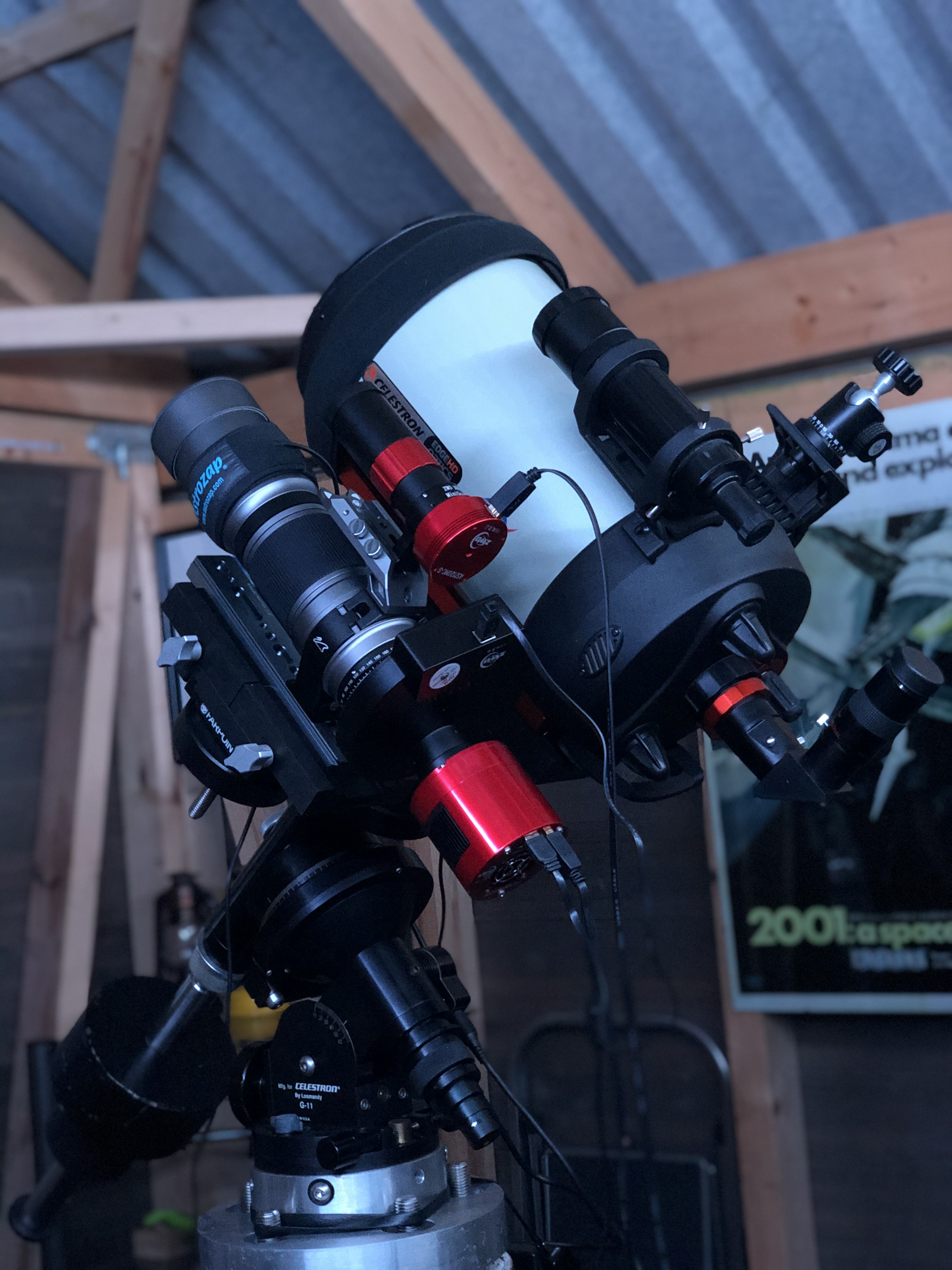
At all times I have two telescopes installed side-by-side. The main telescope for planetary imaging is a Celestron C11 SCT, currently under pro-active maintenance (Its also not easy to balance against my lighter main imaging rig). Because of this my Celestron C8 EdgeHD and a William Optics Spacecat were installed for astrophotography in the first year. My main astrophotography camera is the ZWO ASI1600MM Pro, but a full-frame Sony A7Riii is also used occasionally.

Afterwards I did upgrade my main imaging telescope to a beautiful Takahashi Epsilon 130d. This powerful astrograph is a dream come true. I did need to upgrade the filter size to 31mm as well (I am currently using Astronomik LRGB,Ha,Oiii,Sii filters) but in combination with the ZWO autofocus this is a setup that I will need to spent a long time mastering. Currently I am mostly limited by my PixInsight abillities, but I am working on that 😉 This also freed up the Spacecat for the mobile astrophotography rig. For planetary work I currently use a ZWO ASI462MC camera on the C8 EdgeHD (with a 2x Barlow) or go directly to the C11 .
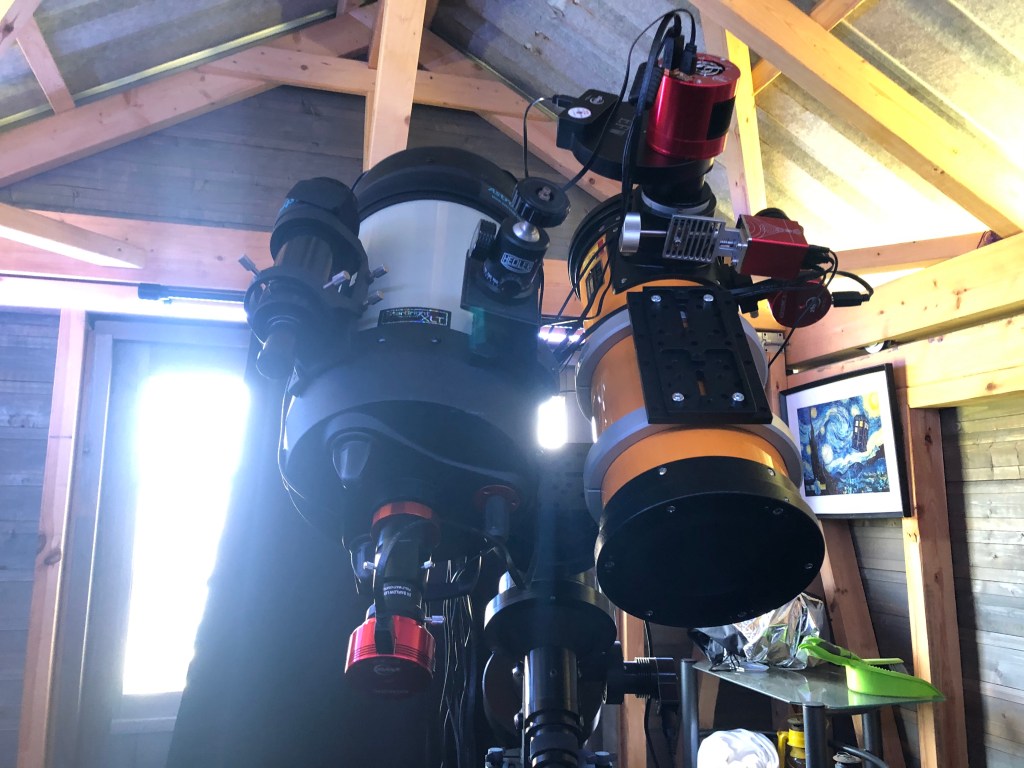
Update March, 2023: Upgrade after upgrade… Experience showed that the AF mount shown above has quite some flexure, who would have guessed. A 3D-printed part solved it at vastly improved the AF routine to a point I have tear in my eyes looking at these beautiful parabolas. Furthermore on top of the Epsilon I have now a Pegasus Powerbox Ultimate V2 and an Intel NUC Mini PC riding (16GB Ram, 500GB SSD, Intel i5) riding. This allowed me to really only have two cables, power and ethernet, running to the telescope. All USB connections are now as short as possible and the setup tidies up a lot. The lack of cables hanging from my setup also greatly improved guiding accuracy. I also sent the mount for maintenance and had the lubrication and some parts changed (probably for the first time in its 30year+ life) which helped a lot especially on colder days. Currently I am not super happy with the fact that the mount can be controlled but not powered by the Powerbox as it requires a bit of a higher voltage to run flawless. An upgrade to the V3 would change that but you see where I am going with that.
 Kreck Observatory